Tired of endless chopping, slicing, and tedious prep work taking up too much of your valuable time in the kitchen? Imagine a versatile kitchen appliance that can transform mundane tasks into quick, effortless steps, giving you more freedom to enjoy the art of cooking. A food processor is precisely that indispensable tool, capable of revolutionizing your culinary routine. This comprehensive guide will navigate you through everything you need to know, from understanding its core functions and diverse types to selecting the perfect model and mastering its use and maintenance, ensuring you choose the best food processor for your needs and maximize its potential.
What is a Food Processor and Why Do You Need One?
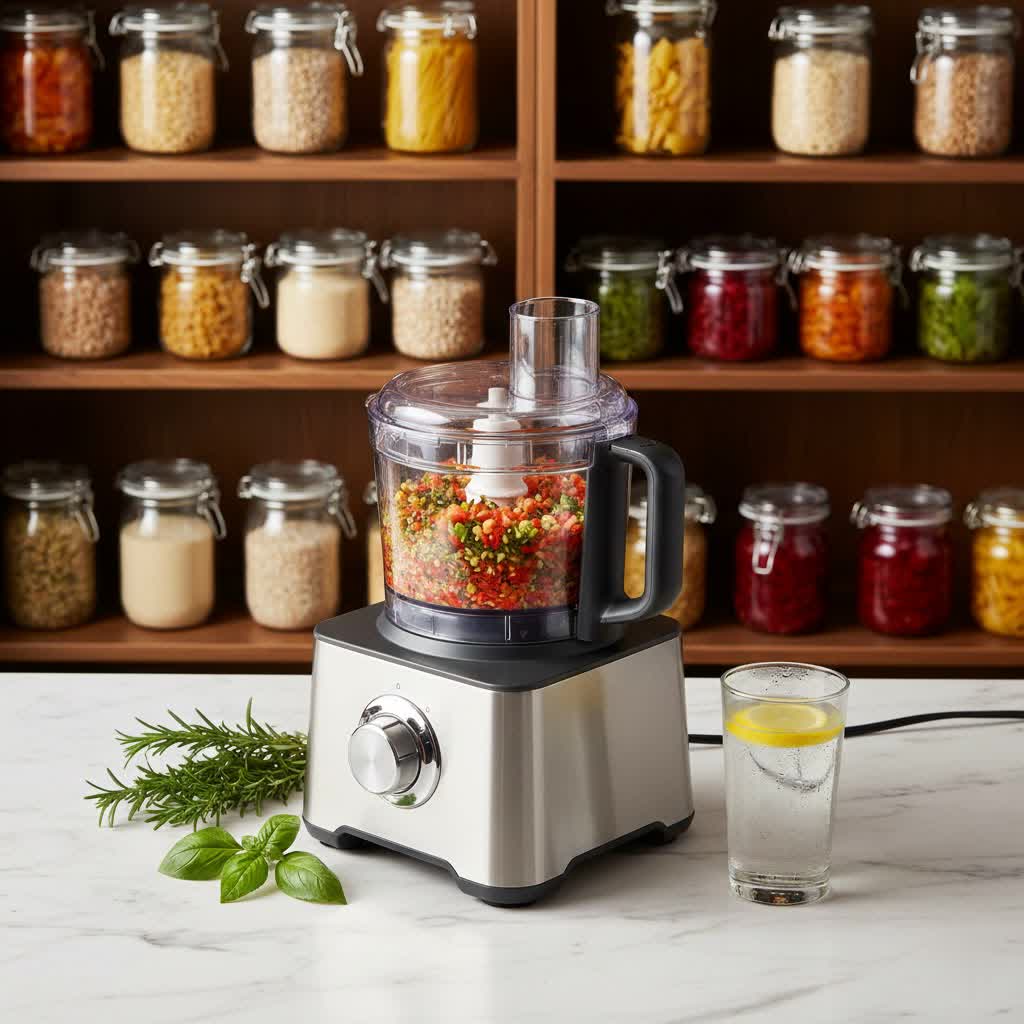
A food processor is a multi-functional countertop appliance engineered to simplify a wide array of food preparation tasks. Its robust motor and interchangeable blades and discs allow it to perform various functions that would otherwise require significant manual effort. Core functions include chopping vegetables, mincing herbs, slicing fruits, shredding cheese, grating hard ingredients, pureeing sauces, mixing batters, and even kneading dough.
Integrating a food processor into your daily cooking offers numerous benefits. It dramatically reduces preparation time, allowing you to whip up meals in minutes rather than hours. Beyond speed, it delivers consistent results, ensuring uniform cuts and textures that are hard to achieve by hand, which can improve cooking consistency and presentation. A food processor effectively replaces several specialized tools like knives, graters, stand mixers, and even blenders for many tasks, making it a space-saving and cost-effective addition to any kitchen. Furthermore, by making prep work easier and quicker, it encourages more home cooking with fresh ingredients, contributing to healthier eating habits.
While both are valuable kitchen appliances, a food processor differs from a blender in its primary purpose. A blender is designed mainly for liquids, excelling at smoothies, soups, and crushing ice, producing smooth, drinkable consistencies. A food processor, however, is built to handle both wet and dry ingredients, excelling at solid-food preparation with a wider range of attachments for chopping, slicing, and kneading. Think of a food processor as your personal sous chef for solid ingredients, while a blender is your go-to for beverages and liquid mixtures.
Popular Types of Food Processors on the Market
Food processors come in various sizes and configurations to suit different needs and kitchen spaces. Understanding these categories can help you identify the ideal appliance for your home.
They are typically categorized by their bowl capacity:
- Mini/Compact Food Processors (3-5 cups): These smaller models are perfect for single servings or minor tasks. They excel at chopping herbs, nuts, garlic, making salad dressings, or emulsifying small batches of mayonnaise. Their compact footprint makes them ideal for kitchens with limited counter or storage space.
- Mid-size Food Processors (7-11 cups): Often considered the most versatile option for average households, these processors can handle a majority of daily cooking tasks. They are suitable for chopping fruits and vegetables for family meals, preparing dips, making breadcrumbs, or mixing doughs for moderate-sized batches.
- Full-size/Large Food Processors (12-16+ cups): Designed for larger families, entertaining, or serious home cooks who frequently engage in batch cooking, these models boast ample capacity. They are capable of processing large quantities of ingredients, kneading heavy doughs, or handling complex recipes with ease.
Beyond size, food processors offer a range of functionalities through various attachments:
- Standard S-Blade: This is the primary blade for chopping, mincing, mixing, and pureeing a wide range of ingredients.
- Dough Blade: Specifically designed for kneading bread, pizza, or pastry dough without overworking it.
- Slicing Discs: Available in various thicknesses, these discs allow you to uniformly slice vegetables and fruits. Some advanced models offer adjustable slicing discs for precise control.
- Shredding Discs: Used for coarse or fine shredding of cheese, cabbage, carrots, or other vegetables.
- Dicing Kits: Some premium food processors come with attachments that can dice ingredients into perfect cubes, a task that is incredibly time-consuming by hand.
- Whisking Discs: Less common but useful for whipping cream or egg whites.
Leading Food Processor Brands: A Comparative Overview
When investing in a food processor, brand reputation, performance, and included features are crucial. Here’s a look at some of the top brands recognized for their quality and innovation:
| Brand | Key Strengths | Typical Capacity Range (Cups) | General Price Point |
|---|---|---|---|
| Cuisinart | High trust, reliable performance, versatility, durable | 4-14 | Mid-High |
| KitchenAid | User-friendly, intuitive design, good value, durable | 3.5-13 | Mid-High |
| Breville | Powerful motors, premium features, adjustable settings | 12-16 | High-Premium |
| Ninja | Strong power, good value, often includes blender functions | 4-12 | Budget-Mid |
| Magimix | Robust, long-lasting, extensive accessories | 12-16 | Premium |
| Hamilton Beach | Affordable, practical features, budget-friendly | 4-12 | Budget |
- Cuisinart: Often considered a pioneer in the home food processor market, Cuisinart consistently earns high trust ratings. Their models are celebrated for reliable performance, sturdy construction, and a wide array of accessories, making them a kitchen workhorse for many.
- KitchenAid: Known for its iconic stand mixers, KitchenAid brings a reputation for durability and user-friendly design to its food processors. They offer excellent value, intuitive controls, and robust performance for everyday tasks, often including useful storage caddies.
- Breville: Positioned at the higher end, Breville’s “Sous Chef” line boasts powerful motors and advanced features like adjustable slicing discs and multiple feed chutes. These machines excel at tackling tough ingredients and intricate preparations, making them a favorite among culinary enthusiasts.
- Ninja: Ninja food processors often stand out for their powerful motors and excellent value. Many models combine food processing capabilities with blending functions, offering versatile 3-in-1 systems that save space and money. They are a strong contender for those seeking high functionality without a premium price tag.
- Magimix: As the original creator of the domestic food processor (under the Robot-Coupe brand), Magimix offers highly durable and powerful machines. They are renowned for their long-lasting motors and extensive range of attachments, providing a professional-grade experience for the home cook.
- Hamilton Beach: A popular choice for budget-conscious consumers, Hamilton Beach food processors provide practical features and dependable performance for basic to intermediate food preparation tasks, offering good functionality at an accessible price point.
Essential Factors When Buying a Food Processor (Buying Guide)
Choosing the right food processor can significantly impact your kitchen efficiency and culinary enjoyment. Here are the key factors to consider before making your purchase:
- Power (Wattage): The motor’s wattage dictates its ability to handle tough ingredients. For basic chopping and slicing, 400-600 watts might suffice. However, for tasks like kneading dense doughs, grinding hard cheeses, or processing large quantities, look for a motor with at least 550 watts, and ideally 750-1200 watts or more, to prevent burnout and ensure smooth operation.
- Capacity (Bowl Size): Match the bowl size to your typical cooking needs.
- 3-5 cups: Ideal for single households, small tasks, or as a secondary chopper.
- 7-11 cups: The most common and versatile for families of 2-4.
- 12-16+ cups: Best for large families, entertaining, or batch cooking. Some models offer nested mini bowls for processing small quantities within a larger unit.
- Blades and Discs: Ensure the food processor comes with the attachments you’ll use most.
- Standard S-blade: Essential for most chopping, mixing, and pureeing tasks.
- Dough blade: A must-have if you plan to make bread or pizza dough.
- Slicing and Shredding discs: Look for adjustable slicing discs for greater precision.
- Dicing kit: A premium feature that offers perfectly uniform cubes.
- Key Features:
- Pulse function: Crucial for precise control, allowing for quick bursts of power for coarse chopping or preventing over-processing.
- Wide feed chute: Minimizes pre-cutting of ingredients, saving time.
- Safety interlock system: Prevents the motor from operating unless the bowl and lid are securely locked, a vital safety feature.
- Easy-to-clean controls: Smooth touchpads are often easier to wipe clean than raised buttons.
- Accessory storage: Integrated in-bowl storage or a separate caddy helps keep attachments organized and protected.
- Material Quality: Opt for durable, BPA-free plastics for the work bowl and sturdy stainless steel for blades and discs to ensure longevity and food safety. A heavy, stable base is also important to prevent movement during operation.
- Ease of Cleaning: Many parts, like the bowl and lid, are often dishwasher-safe. However, hand-washing blades is generally recommended to preserve their sharpness. Look for designs with minimal crevices where food can get trapped.
- Brand Reputation and Warranty: Purchasing from reputable brands often guarantees better build quality, reliable performance, and access to customer support and warranty services, providing peace of mind.
- Price vs. Features: Food processors vary widely in price. Determine your budget, then prioritize the features and capacity that are most essential to your cooking style. Sometimes, a slightly higher initial investment in a well-built model can save money and frustration in the long run.
Top-Rated Food Processors: Our Current Favorites
Based on extensive testing and user reviews, several food processors consistently stand out for their performance, features, and value. Here are a few top picks that cater to different needs:
- Breville Sous Chef 16-Cup Food Processor: This premium model is often hailed as the “Ferrari of food processors.” With a powerful motor, multiple feed chute options, and an impressive 24-setting adjustable slicing disc, it offers unmatched versatility and precision. It’s ideal for serious home cooks and those who frequently process large quantities or demand professional-grade results. Its array of cutting discs, including a French fry disc and dicing kit, makes it a true culinary powerhouse.
- Cuisinart Custom 14-Cup Food Processor: A perennial favorite, the Cuisinart 14-Cup is a reliable workhorse known for its straightforward design and robust performance. It handles everything from chopping vegetables to kneading dough with consistent excellence. Its simple two-button (on/off and pulse) interface makes it incredibly user-friendly, and its large capacity is perfect for family-sized meals and batch cooking. It’s a fantastic choice for those seeking a dependable, no-frills machine.
- Ninja Professional Plus Food Processor (BN650UK/BN800UK): Offering exceptional value, Ninja models are praised for their powerful 1000W+ motors and unique double blades that ensure even processing. Often available as a 3-in-1 system that includes a blender pitcher, these models are versatile and budget-friendly. They excel at chopping, pureeing, and making dough, providing strong functionality for their price point, making them a great option for entry-level users or those with limited space.
- KitchenAid 13-Cup Food Processor with Dicing Kit: This mid-sized option strikes an excellent balance between capacity, performance, and user-friendliness. KitchenAid’s reputation for quality shines through in its intuitive design and consistent results across various tasks, from slicing and shredding to dicing with its dedicated kit. It’s a great choice for medium-sized families looking for a reliable, feature-rich food processor.
- Hamilton Beach Stack & Snap 4-Cup Mini Food Processor: For those with small kitchens or minimal processing needs, this compact and budget-friendly option is a standout. Its simple stack-and-snap assembly makes it easy to use, and it performs surprisingly well for chopping herbs, nuts, and making small batches of dips and dressings. It’s an excellent entry-level or secondary food processor.
Tips for Using and Maintaining Your Food Processor Effectively
To get the most out of your food processor and ensure its longevity, proper usage and diligent maintenance are key.
Safe and Efficient Use:
- Don’t Overload: To prevent motor strain and achieve even processing, avoid filling the work bowl more than two-thirds to three-quarters full, especially with liquids or heavy ingredients.
- Use the Pulse Function: The pulse setting gives you greater control over consistency. Use short bursts for coarse chopping and longer pulses for finer textures, rather than continuous running.
- Utilize the Feed Chute and Pusher: For slicing and shredding, use the feed chute to guide ingredients into the blades. Always use the provided pusher to keep your fingers safely away from sharp blades.
- Cut Large Items: While wide feed chutes reduce pre-cutting, ensure very large or fibrous ingredients are cut into smaller pieces that fit comfortably in the chute to avoid jamming the motor.
|
Our Picks for the Best Food Processor in 2026
As an Amazon Associate I earn from qualifying purchases.
|
||
| Num | Product | Action |
|---|---|---|
| 1 | BLACK+DECKER 8-Cup Food Processor, Easy Assembly, Stainless Steel S-Blade, Shred, Slice, Chop, Puree, 450W Motor |

|
| 2 | KitchenAid 7-Cup Food Processor - KFP0718 |
|
| 3 | Ninja Food Processor, Professional Plus, 1000 Peak Watts, 4 Functions for Chopping, Slicing, Purees & Dough with 9-Cup Processor Bowl, 3 Blades, Food Chute & Pusher, Silver, BN601 |
|
| 4 | BLACK+DECKER 3-in-1 Easy Assembly 8-Cup Food Processor, Stainless Steel S-Blade, Easy-Clean, Touchpad Controls Black |
|
| 5 | GANIZA Food Processors, Electric Food Chopper with Meat Grinder & Vegetable Chopper - 2 Bowls (8 Cup+8 Cup) with Powerful 450W Copper Motor - Includes 2 Sets of Bi-Level Blades for Fruits/Meat/Nuts |
|
| 6 | Inequalit Electric Vegetables Slicer Cheese Shredder, 5-in-1 250W Professional Automatic Salad Fruits Maker Shooter Chopper Machine Kitchen Cutter Grater Food Processor with 5 Different Blades |
|
| 7 | SPZTJK 3-Speed Electric Food Processor: Meat Grinder, Vegetable Chopper & Baby Food Maker - 300W, 2 Bowls (8 Cup Stainless Steel+8 Cup Glass), Quiet Operation |
|
| 8 | Hamilton Beach Electric Vegetable Chopper & Mini Food Processor, 3-Cup, 350 Watts, for Dicing, Mincing, and Puree, Black (72850) |
|
| 9 | Cuisinart Food Processor, 14-Cup Vegetable Food Chopper for Mincing, Dicing, Shredding, Puree & Kneading Dough, 720-Watt Motor, Stainless Steel, DFP-14BCNY |
|
| 10 | Hamilton Beach Food Processor & Vegetable Chopper for Slicing, Shredding, Mincing, and Puree, 10 Cups + Easy Clean Bowl Scraper, Black and Stainless Steel (70730) |
|
Cleaning and Care:
- Clean Immediately: The easiest way to clean your food processor is right after use, before food has a chance to dry and stick.
- Disconnect and Disassemble: Always unplug the unit before cleaning. Carefully remove the lid, blades, and work bowl. Handle blades with extreme caution; they are very sharp.
- Wipe the Motor Base: Never immerse the motor base in water. Instead, wipe it down with a damp cloth and a mild detergent. Pay attention to crevices around buttons and the motor shaft.
- Hand Wash Blades: While some parts might be dishwasher-safe, hand-washing blades with warm soapy water and a small brush is often recommended to maintain their sharpness and prevent dulling from harsh dishwasher detergents and high heat. Do not leave blades soaking blindly in soapy water.
- Wash Bowl and Lid: Most work bowls and lids are dishwasher-safe (top rack recommended), but you can also hand wash them with warm soapy water. For stubborn stains, a paste of baking soda and water can be effective.
- Dry Thoroughly: Ensure all parts are completely dry before reassembling and storing to prevent mold, mildew, and unpleasant odors.
- Store Safely: Use any included storage caddies or in-bowl storage solutions to keep blades and discs organized and prevent damage or injury.
Troubleshooting Common Issues:
- Motor Overheating: Often caused by overloading the bowl or processing tough ingredients for too long. Reduce load size or use shorter pulse bursts.
- Dull Blades: Over time, blades can dull. Professional sharpening or replacement can restore performance.
- Uneven Chopping: Ensure you’re not overloading the bowl. For small quantities, a mini bowl attachment or a smaller food chopper might yield better results.
Conclusion
A food processor is more than just another kitchen gadget; it’s a transformative tool that brings unparalleled efficiency and versatility to your cooking. From effortlessly chopping vegetables and kneading dough to crafting gourmet sauces and purees, it significantly reduces prep time and delivers consistent, professional-quality results. By understanding the different types, considering essential buying factors like power and capacity, and adhering to proper usage and maintenance, you can select the ideal food processor to fit your lifestyle. This powerful appliance empowers you to explore new recipes, streamline your meal preparation, and ultimately, rediscover the joy of cooking.
Ready to transform your kitchen and culinary adventures?
Frequently Asked Questions
Can a food processor replace a blender?
While a food processor can perform some blending tasks like pureeing soups or making smoothies from softer ingredients, it is not a direct replacement for a blender. Blenders are specifically designed for liquids and excelling at tasks like crushing ice and creating very smooth consistencies, which a food processor may struggle with.
What wattage do I need for a food processor?
For most general household tasks and full-sized food processors (9 cups or larger), a motor with at least 550 watts is recommended. If you plan to frequently process tough ingredients like hard cheeses, dense doughs, or large quantities of vegetables, opting for a model with 750 watts or more will provide better performance and longevity.
How do I clean food processor blades safely?
Always handle food processor blades with extreme caution. After unplugging and disassembling, hand wash blades individually with warm soapy water using a small brush, scrubbing from the center outwards. Avoid leaving blades submerged in soapy water, where they might be accidentally encountered, and ensure they are thoroughly dry before storing.
What’s the best food processor size for a family of four?
For a family of four, a mid-size food processor with a bowl capacity of 7 to 11 cups is generally ideal. This size offers enough capacity for most everyday tasks, such as chopping vegetables for meals, making dips, or preparing dough, without being excessively large for storage.
Are food processor parts dishwasher safe?
Many food processor parts, including the work bowl and lid, are often labeled as dishwasher-safe (usually on the top rack). However, it’s always best to consult your appliance’s user manual for specific care instructions. Blades, in particular, are often recommended for hand-washing to help maintain their sharpness over time.
