Stepping into the world of kitchen gadgets, it’s easy to feel overwhelmed by the sheer variety, especially when two powerful contenders, the food processor and the blender, seem to offer similar promises. Both boast blades and motors, claiming to revolutionize your cooking. But beneath the surface, these culinary workhorses are engineered for distinct purposes, each excelling in its own domain. Understanding their core differences is crucial to equipping your kitchen efficiently, ensuring you have the right tool for every task, whether you’re whipping up a silky-smooth smoothie or perfectly dicing vegetables for a hearty stew. This guide will clarify the unique strengths of each appliance, helping you make an informed decision for your culinary adventures.
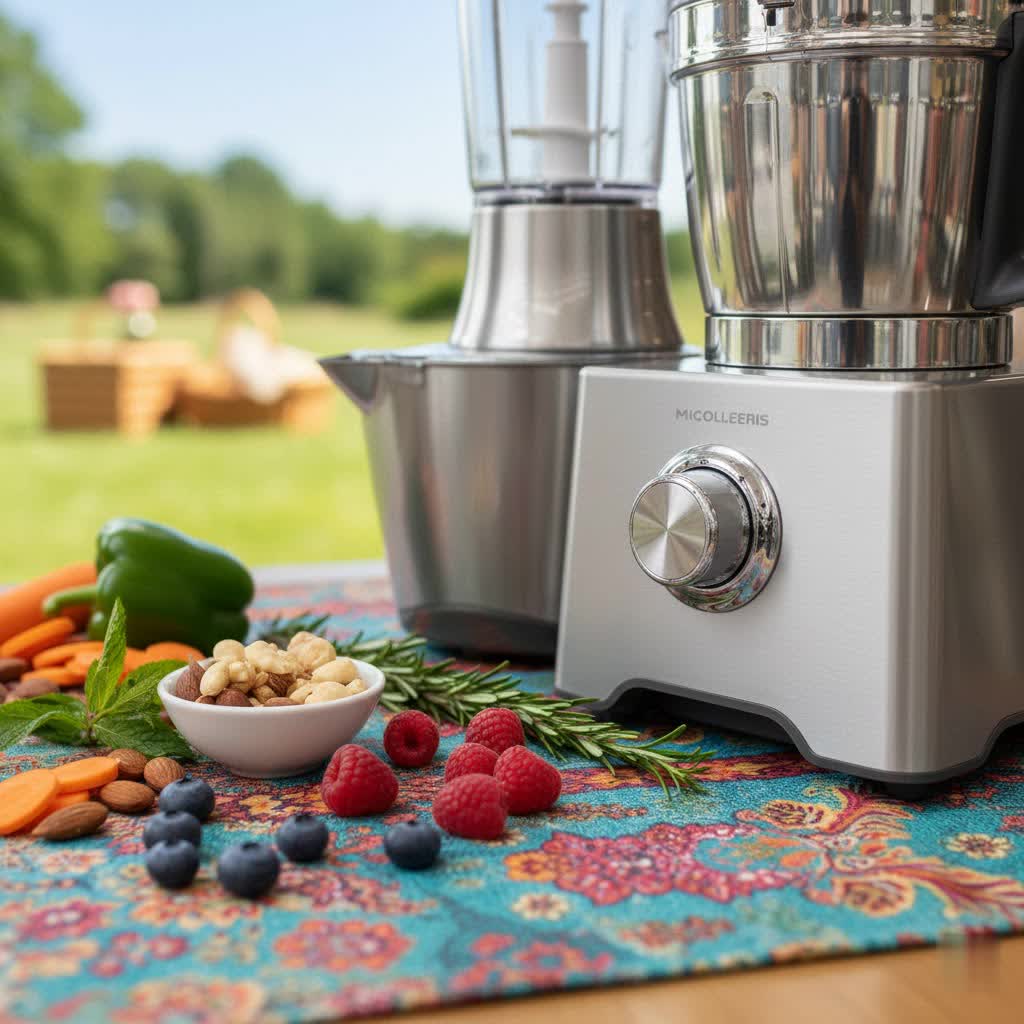
What is a Food Processor and Why You Need It?
A food processor is a versatile kitchen appliance designed to streamline a wide array of food preparation tasks that typically involve solid or semi-solid ingredients. Think of it as your ultimate prep assistant, capable of chopping, slicing, shredding, grating, pureeing, and even kneading dough with remarkable efficiency. Its primary function is to transform ingredients into various textures, from finely minced garlic to evenly shredded cheese, dramatically cutting down on manual labor and prep time in the kitchen.
The benefits of incorporating a food processor into your daily cooking routine are immense. It excels at repetitive tasks, such as chopping large quantities of onions without tears or slicing potatoes uniformly for gratins. This appliance is adept at handling thicker, denser ingredients like chickpeas for hummus, nuts for butter, or sturdy vegetables for salsas. With a food processor, tedious manual work becomes effortless, allowing you to explore more complex recipes and enjoy faster, more consistent results.
Key to its versatility are its design elements: a wide work bowl that accommodates larger volumes of food, a powerful motor geared for torque rather than extreme speed, and a variety of interchangeable blades and discs. The signature S-shaped blade, often called a Sabatier blade, sits at the bottom of the bowl and spins at slower speeds to precisely cut and mix without instantly liquefying ingredients. Additionally, a feed tube on the lid allows you to safely add ingredients while the machine is running, particularly useful for continuous slicing or shredding with specialized discs.
What is a Blender and Why You Need It?
In contrast to the food processor’s focus on solids, a blender is specifically engineered to handle liquids and transform ingredients into smooth, pourable consistencies. It is the undisputed champion of creamy drinks, velvety soups, and silky sauces. If your culinary goals involve liquefying, pureeing to an ultra-fine texture, or crushing ice, a blender is the indispensable tool for the job.
The primary benefit of a blender lies in its ability to achieve unparalleled smoothness. Its high-speed blades generate a powerful vortex that pulls ingredients downwards, ensuring thorough and consistent blending. This makes it perfect for crafting nutrient-dense smoothies, creating lump-free purees for baby food, emulsifying salad dressings, or turning cooked vegetables into a creamy soup base. For those who prioritize healthy beverages or often make liquid-based meals, a blender significantly simplifies and elevates these preparations.
The design of a blender is optimized for its liquid-centric tasks. It typically features a tall, narrow pitcher or jar, which is essential for creating the strong vortex needed to process ingredients into a homogeneous mixture. At the base of the jar, fixed multi-pronged blades spin at incredibly high RPMs, pulverizing fibers and tough ingredients into a smooth liquid. While some high-powered blenders can handle small amounts of thicker ingredients, they generally perform best when there’s sufficient liquid to facilitate the blending action.
Food Processor vs. Blender: A Direct Comparison
Understanding the fundamental differences between these two appliances is crucial for deciding which one best suits your kitchen needs. Here’s a direct comparison of their key features and ideal uses:
| Feature | Food Processor | Blender |
|---|---|---|
| Primary Function | Chopping, slicing, shredding, grating, dicing, kneading, pureeing (thick) | Liquefying, pureeing (smooth), blending, crushing ice, emulsifying |
| Ideal Ingredients | Solids, semi-solids, thick mixtures (vegetables, nuts, dough, cheese) | Liquids, soft fruits, cooked vegetables (with liquid), ice |
| Texture Achieved | Variable (chunky, minced, shredded, fine puree, kneaded dough) | Smooth, silky, uniform liquid consistency |
| Blades/Attachments | Interchangeable S-blade, slicing discs, shredding discs, dough blade | Fixed multi-pronged blade assembly |
| Motor Action | High torque, lower speed for cutting and mixing | High speed for pulverizing and vortex creation |
| Work Bowl/Jar | Wide, large capacity work bowl | Tall, narrow jar |
| Liquid Requirement | Minimal to none; can struggle with large liquids | Requires sufficient liquid for optimal operation |
| Best For | Meal prep, baking, dips, salsas, chopping vegetables | Smoothies, soups, sauces, purees, frozen drinks |
When to Use a Food Processor
The food processor shines in scenarios demanding precise cuts, varied textures, and the handling of drier, denser ingredients. It’s an indispensable tool for specific culinary tasks:
- Chopping Vegetables: For perfectly uniform diced onions, minced garlic, or finely chopped herbs for tabbouleh, a food processor ensures consistency and saves immense time.
- Making Dough: Whether it’s a flaky pie crust, pizza dough, or bread dough, the dough blade attachment and powerful motor can knead ingredients efficiently, producing consistent results without overworking the gluten.
- Shredding Cheese: Instead of buying pre-shredded cheese, a food processor with a shredding disc can quickly process blocks of cheese, offering better flavor and often saving money.
- Preparing Thick Dips and Spreads: Hummus, pesto, salsa, and chunky spreads are perfectly suited for a food processor. Its wide bowl allows for even mixing and easy scraping, creating the ideal texture.
- Grinding Nuts or Meats: From making nut flours to grinding fresh meat for burgers or meatballs, the food processor delivers precise control over the consistency.
When to Use a Blender
Conversely, the blender is the go-to appliance when your goal is ultimate smoothness and liquid-based concoctions.
- Crafting Smoothies and Shakes: This is perhaps its most popular use. A blender effortlessly combines fruits, vegetables, ice, and liquids into perfectly smooth and refreshing beverages.
- Creating Creamy Soups and Sauces: For velvety pureed soups like butternut squash or tomato, or smooth sauces such as béchamel or hollandaise, a blender ensures a luxurious texture free of lumps.
- Pureeing Baby Food: Making homemade baby food is simple with a blender, which can transform cooked fruits and vegetables into a perfectly smooth and digestible consistency.
- Crushing Ice: High-powered blenders can effortlessly turn ice cubes into crushed ice for cocktails or frozen drinks, a task that can be damaging to a food processor’s blades.
- Emulsifying Dressings: For smooth vinaigrettes or creamy salad dressings, a blender quickly combines oil and vinegar (and other ingredients) into a stable emulsion.
Can They Be Used Interchangeably? The Overlap & Limitations
While some tasks might seem to fall into a gray area, it’s generally best to use each appliance for what it excels at. Both can technically puree ingredients and make certain dips or nut butters. For example, both can process ingredients for a chunky salsa, but the food processor will give you more control over the size of the chop, while a blender might quickly turn it into a saucier consistency if not carefully pulsed.
However, there are significant limitations. A food processor, due to its design and blade speed, will struggle to create the super-smooth, lump-free consistency required for a true smoothie or a perfectly velvety soup. It may also leak if filled with too much liquid. Attempting to crush ice in a food processor can damage its motor and blades.
On the other hand, a blender is ill-equipped for tasks requiring precise chopping, slicing, shredding, or kneading dough. Its narrow jar and high-speed blades will often over-process ingredients, turning them into a paste rather than evenly cut pieces, or struggle to incorporate dry, thick mixtures. Trying to shred cheese or slice vegetables in a blender will likely result in an uneven, messy outcome. Therefore, while there’s a slight overlap, neither appliance is a perfect substitute for the other.
Choosing Your Kitchen Companion: Do You Need Both?
The decision between a food processor and a blender, or whether to invest in both, ultimately hinges on your individual cooking habits, the types of dishes you frequently prepare, and your available kitchen space and budget.
If your kitchen routine primarily involves making smoothies, protein shakes, or creamy soups and sauces, a high-quality blender will be your most valuable asset. If you frequently engage in meal prep, baking, or cooking that requires chopping, slicing, shredding, or kneading dough, a food processor will be indispensable.
For serious home cooks who enjoy a wide variety of culinary tasks, having both appliances offers the ultimate versatility and efficiency. Each will handle its specialized tasks with superior results, saving you time and effort. If space or budget is a constraint, consider which tasks you perform most often and invest in the appliance that addresses those needs first. Some manufacturers also offer blender bases with food processor attachments, providing a hybrid solution that saves counter space, though often at a higher initial cost.
> “Understanding your cooking frequency and the types of dishes you prepare is key. If you often find yourself chopping heaps of vegetables for stir-fries and making homemade dough, a food processor is non-negotiable. But if daily smoothies and creamy purees are your jam, you’ll reach for your blender far more often.”
Tips for Using and Maintaining Your Food Processor and Blender
To ensure longevity and optimal performance, proper use and maintenance are crucial for both appliances:
- Read the Manual: Always consult the manufacturer’s instructions for specific operating guidelines, maximum fill lines, and cleaning recommendations.
- Proper Loading: For food processors, avoid overfilling the work bowl to ensure even processing. For blenders, add liquids first, then softer ingredients, followed by harder items and ice, to help create the vortex.
- Pulsing Power: Use the pulse function on both appliances for better control, especially with food processors to achieve desired textures (e.g., chunky salsa) and with blenders to break down larger pieces before continuous blending.
- Cleaning: Most components (bowls, jars, blades) are top-rack dishwasher safe, but check individual product instructions. Be cautious when handling sharp blades. For blenders, filling the jar with warm water and a drop of dish soap and blending for a few seconds can help dislodge residue.
- Storage: Store attachments properly to prevent damage and ensure they are readily accessible.
Conclusion
The choice between a food processor and a blender isn’t about one being inherently “better” than the other; it’s about identifying the right tool for specific culinary jobs. The food processor is your ultimate prep master, excelling at handling solids for chopping, slicing, shredding, and dough-making, bringing texture and efficiency to your meal preparations. The blender, on the other hand, is the maestro of smoothness, transforming ingredients into luscious liquids for smoothies, soups, and sauces.
Ultimately, by understanding their unique functionalities and design principles, you can confidently choose the appliance that best aligns with your cooking style and needs, or decide that the synergy of both tools will unlock your kitchen’s full potential. Which appliance do you find yourself reaching for most often in your daily cooking adventures?
Frequently Asked Questions
Can a food processor make smoothies as well as a blender?
|
Our Picks for the Best Food Processor in 2026
As an Amazon Associate I earn from qualifying purchases.
|
||
| Num | Product | Action |
|---|---|---|
| 1 | Cuisinart Food Processor, 14-Cup Vegetable Food Chopper for Mincing, Dicing, Shredding, Puree & Kneading Dough, 720-Watt Motor, Stainless Steel, DFP-14BCNY |

|
| 2 | Hamilton Beach Electric Vegetable Chopper & Mini Food Processor, 3-Cup, 350 Watts, for Dicing, Mincing, and Puree, Black (72850) |
|
| 3 | BLACK+DECKER 3-in-1 Easy Assembly 8-Cup Food Processor, Stainless Steel S-Blade, Easy-Clean, Touchpad Controls Black |
|
| 4 | GANIZA Food Processors, Electric Food Chopper with Meat Grinder & Vegetable Chopper - 2 Bowls (8 Cup+8 Cup) with Powerful 450W Copper Motor - Includes 2 Sets of Bi-Level Blades for Fruits/Meat/Nuts |
|
| 5 | KitchenAid 7-Cup Food Processor - KFP0718 |
|
| 6 | Ninja Food Processor, Professional Plus, 1000 Peak Watts, 4 Functions for Chopping, Slicing, Purees & Dough with 9-Cup Processor Bowl, 3 Blades, Food Chute & Pusher, Silver, BN601 |
|
| 7 | BLACK+DECKER 8-Cup Food Processor, Easy Assembly, Stainless Steel S-Blade, Shred, Slice, Chop, Puree, 450W Motor |
|
| 8 | Hamilton Beach Food Processor & Vegetable Chopper for Slicing, Shredding, Mincing, and Puree, 10 Cups + Easy Clean Bowl Scraper, Black and Stainless Steel (70730) |
|
| 9 | Inequalit Electric Vegetables Slicer Cheese Shredder, 5-in-1 250W Professional Automatic Salad Fruits Maker Shooter Chopper Machine Kitchen Cutter Grater Food Processor with 5 Different Blades |
|
| 10 | SPZTJK 3-Speed Electric Food Processor: Meat Grinder, Vegetable Chopper & Baby Food Maker - 300W, 2 Bowls (8 Cup Stainless Steel+8 Cup Glass), Quiet Operation |
|
While a food processor can technically puree some ingredients for a smoothie, it generally won’t achieve the same silky-smooth, lump-free consistency that a high-speed blender provides. Blenders are designed with tall, narrow jars and high-RPM blades specifically for liquefying ingredients thoroughly.
Can I chop vegetables in a blender?
You can attempt to chop vegetables in a blender using the pulse function, but the results are often inconsistent, with some pieces being pureed while others remain too large. A food processor, with its S-shaped blade and wider bowl, is far more effective at delivering even, precise cuts without turning vegetables into a watery paste.
Which is better for making hummus, a food processor or a blender?
A food processor is typically the superior choice for making hummus. Its wide bowl and powerful S-blade can efficiently break down chickpeas and other ingredients into a thick, creamy consistency, allowing for better texture control. A blender might struggle with the dense mixture, requiring more liquid to process effectively.
Is it possible to knead dough in a blender?
No, kneading dough in a blender is not advisable. Blenders are not designed for the heavy, thick consistency of dough and attempting to do so can strain or damage the motor. A food processor, especially with a dedicated dough blade, is specifically built to handle dough efficiently and effectively.
